

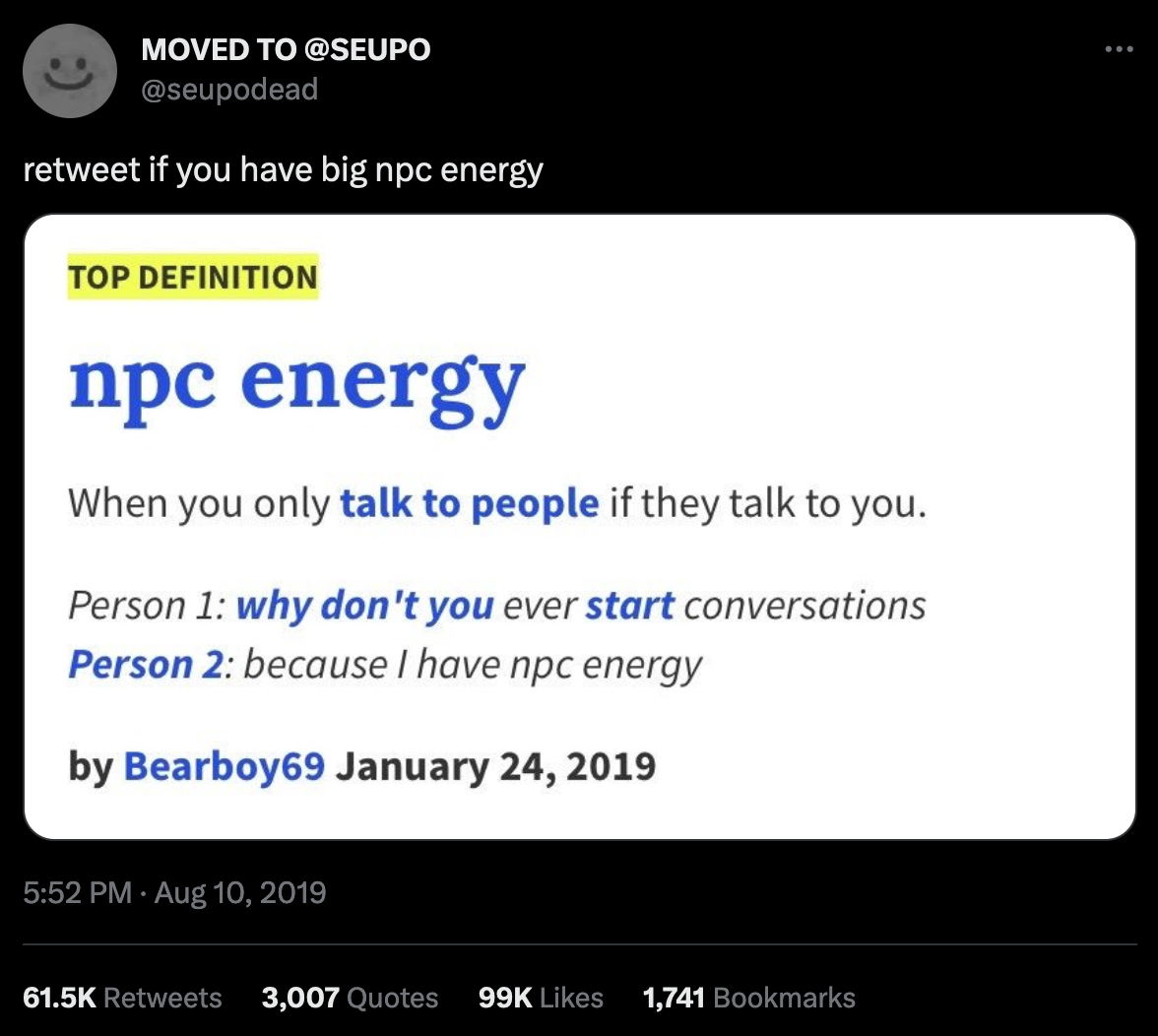
Although the term “NPC” is one of the more popular ways to disparage others as shallow, numerous other memes and slang words also contribute to the current discourse. Most recently, TikTokers decided that “Ryan Smith” was the most generic name out there, and began associating it with those who had such a total lack of unique traits that they could have been put together on a factory assembly line.
There are also phrases that more specifically target consumption habits and identity markers that are seen as distasteful, making those who associate with them shallow and weak-minded. Issues range from collecting Labubus to being overly reliant on ChatGPT. These include “Chubai” (a portmanteau of “chopped” and Dubai) and “Spiritually Israeli.”
On a certain level, it is understandable to criticize these mainstream crazes when they lack substance or seem to encourage the worst kinds of impulses that people can have. It appears that the more we live our lives on social media, the shorter the trend cycle becomes. A concept that is most often associated with fashion but is applicable in other contexts that describe how long it takes a trend to reach peak saturation.
Another symptom of being ever more connected to the internet is marketing being more ubiquitous than ever before. Even the most self-aware individuals are not totally immune to being sold a product that caters to their preferences. In that case, there is little hope for anybody who is less sure of themselves and more easily influenced.
Of course, just because some are more likely to fall for the hype than others doesn’t mean that we have to exist in a constant state of “let people enjoy things.” The choice to buy a trending item that is destined for landfill, or vacationing in a place that has a dubious record for human rights, are things that many would agree are worth criticizing. However, doing so by asserting that you are more capable of being an individual than such people is missing the point.
The fact of the matter is that these kinds of memes are the lowest form of criticism. This can be fun, and sometimes a gateway to a more interesting conversation, but it usually does little to improve on the problem that is being identified. Snobbery isn’t always a bad thing, but it doesn’t take a lot for it to be equally as shallow as whatever it opposes.
The implicit message of those who use these kinds of memes is that they are superior to the masses, one of the intelligent few who understand the true complexity of what it means to exist as a human being. At its most extreme, those who subscribe to the NPC trend take it to the point of a conspiracy theory. They are convinced that a large proportion of the population is incapable of independent thought, existing to prop up the global order and keep the enlightened ones trapped in a situation that they feel they cannot escape.
It is fair to say that most of those claiming that a certain brand is Chubai or joking about the boring preferences of Ryan Smith are not taking their NPC distaste as far as this. Still, it betrays a true lack of perspective to assume that everybody who engages with something tacky and popular is devoid of any depth whatsoever. After all, the main character is similarly stuck within a predestined narrative that somebody else has decided for them.
In a world where monoculture is more prevalent than ever, setting yourself apart can be as simple as decrying those who are a part of it. Critiquing conformity can be a good thing, but doing that while conforming to a trend of its own often falls flat. Defining others as lacking depth and then positioning oneself as superior, with little evidence, only shows that nobody involved can really be taken seriously. None of us is completely insulated from the influence of the society that we live in, and as a result, most of us have a touch of NPC in our personalities.
